
Contact us
Shenzhen JDT Fuse Industrial Co.,Ltd
Leave a message
Home>Technical Support
Fuse Technical Support
How PPTC fuses work, how to select them, how thermal derating is calculated, plus tripping, non-recovery and cross-reference questions.
-
 FAQ
Making a Fuse Withstand Repeated Surge Pulses
To make a fuse withstand repeated surge pulses, sufficient margin must be kept between the I2t o...
-
 FAQ
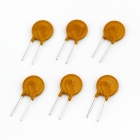
Single-Use Fuses vs. Resettable Fuses
Structurally, a resettable fuse is made of high-molecular polymer and is essentially a positive ...
-
 FAQ
Fast-Acting vs Time-Lag Fuses: A Comparison
A time-lag fuse has a larger I2t than a fast-acting fuse of the same rating, so its melting time...
-
 FAQ
How to Understand the Fusing Characteristics of a Fuse
Fusing characteristics differ from fuse to fuse, and circuits of different kinds have different ...
-
 FAQ
How a Fuse's Rated Current Relates to Its Fusing Current
Rated current is the current an electrical load draws when it runs at its rated voltage and rate...
-
 FAQ
What the Voltage Drop of a Fuse Tells You
First, the encyclopedia definition: when current passes through an electrical load (a resistance...
-
 FAQ
Definition and Function of a Fuse
A fuse is described in Baidu Baike as a fuse-link, but that is not entirely accurate. As we expl...
-
 FAQ
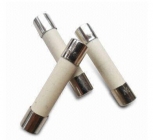
Why Fuses Often Blow at Switch-On or When Power Is First Applied
A specialist at Shenzhen Joincircuit Industrial Co., Ltd. explains: most circuits draw a momenta...
-
 FAQ
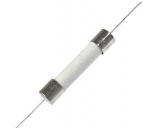
What Is Breaking Capacity and Why It Matters
A fuse's breaking capacity is a safety rating with little relation to its electrical performance...
-
 FAQ
What Is a Time-Lag Fuse
Time-lag fuse is another name for the slow-blow fuse. It provides both short-circuit and overloa...
-
 FAQ
Understanding the Rated Voltage of a Fuse
The rated voltage is the voltage at which an appliance operates normally. It is the optimum volt...
-
 FAQ
Fuse or Fusible Resistor: Which Is Better?
A reader from Shanxi, posting as Moxian Nuan, answers: fusible resistors and fuses play differen...
-
 FAQ
Common SMD Fuse Parameters Explained
The parameters and terms most often encountered in fuse selection are explained below, including...
-
 FAQ
How to Select an SMD Fuse
Selecting an SMD fuse involves the following factors: (1) Normal circuit operating current. T...
-
 FAQ
Is a Fuse-Link the Same as a Fuse?
A fuse is an electrical device that breaks a circuit by melting its element with its own heat wh...